
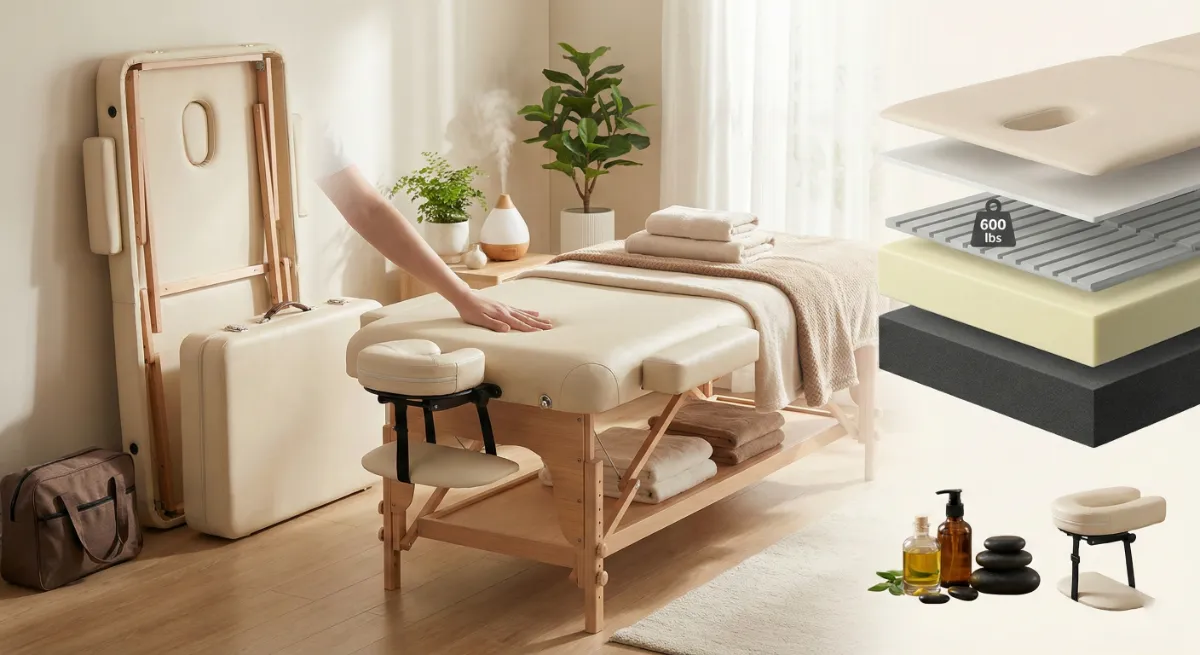
Buying your first massage bed is a big deal! Whether you are a fresh graduate starting a mobile massage gig, outfitting a brand-new salon, or simply looking to upgrade your home spa setup, this piece of furniture is the heart of your workspace. It’s where the magic happens and where your clients finally get to unwind.
But with so many options out there, scrolling through catalogs can feel a bit overwhelming. Don’t sweat it. As folks who build salon furniture every day, we are here to give you the insider scoop. Let’s break down the absolute essentials you need to know so you can choose the perfect bed without the headache.
Types of massage beds
The very first thing you need to figure out is where this bed is going to live and how you plan to use it.
- Portable Massage Beds: If you are a mobile therapist traveling to clients’ homes, or if you share a space and need to pack up at the end of the day, a portable bed is your best friend. They are usually made of lightweight aluminum or wood, fold up like a giant suitcase, and typically weigh around 30 to 40 pounds. The tradeoff? They might not have the heavy-duty stability of a permanent fixture, but modern designs are incredibly sturdy and get the job done beautifully.
- Stationary Massage Beds: Setting up a permanent spa room or salon? Go stationary. These beds are heavier, incredibly stable, and designed to stay put. They often come with handy storage shelves underneath for your towels and oils, and they can support a massive amount of weight. They scream “luxury spa” and give your room a highly professional anchor.
Massage bed load-bearing capacity
When you look at massage bed specs, you’ll usually see two different numbers: Static Weight and Working Weight. Here is the simple translation of what they actually mean for you:
- Static Weight: This is how much weight the bed can hold when the weight is perfectly still (like dropping a heavy block on it). It’s a big number, sometimes 2,000 lbs or more. Honestly, it’s impressive, but it’s not the number you should care about most.
- Working Weight: This is the golden rule. Working weight is how much dynamic, moving weight the bed can safely support. Remember, it’s not just the client’s body weight—it’s also the physical pressure you are applying during a deep tissue massage. Always look for a working weight of at least 400 to 600 lbs to keep both you and your clients totally safe and secure.
How to choose foam density and thickness
Ever laid on a cheap mattress? Your clients will notice instantly if you skimp on the foam. The padding is what makes them relax, so getting this right is crucial for your reputation.
- Foam Density: This is actually more important than how thick the foam is. You want high-density foam. Low-density foam feels soft and fluffy at first, but it flattens out like a pancake after a few months, leaving your clients feeling the hard wooden board underneath. High-density foam keeps its shape, offers great supportive bounce back, and lasts for years.
- Foam Thickness: Aim for a sweet spot of 2 to 3 inches of foam. Thicker isn’t always better if the density is low. A solid 2.5-inch multi-layer, high-density foam system will beat a fluffy 4-inch cheap foam any day of the week.
A Few Extra Features to Keep on Your Radar
Once you have the frame, weight capacity, and foam sorted out, keep an eye out for these final touches to make sure the bed is a perfect fit:
- Adjustable Height: Your back will thank you! Ensure the bed has easy-to-use knobs or push-buttons to adjust the height. You want the top of the bed to hit right around your knuckles when your arms are resting at your sides to prevent strain while working.
- Width: Standard beds are about 28 to 30 inches wide. If you go too narrow, clients’ arms might fall off the sides. Too wide, and you’ll be straining your own back trying to reach across them. A 30-inch width is generally a safe, comfortable bet for most body types.
- Upholstery: Look for PU (Polyurethane) leather rather than PVC. PU is softer, feels more like real leather, is better for the environment, and won’t crack as easily over time. It’s also super easy to wipe down and sanitize between clients.
- Face Cradles and Armrests: Don’t forget the attachments! An easily adjustable face cradle is a must-have for client comfort when they are face-down, and side armrests are a nice bonus if you opt for a slightly narrower bed.
Choosing your first massage bed doesn’t have to be stressful. Start by deciding if you need to travel with it, make sure the working weight fits your practice, and invest in good high-density foam. Treat it as an investment in your business and your clients’ comfort, and you can’t go wrong!